

There are many types of sarees in India that are classified as craft products because they involve traditional hand-weaving, dyeing, embroidery, or printing techniques. Here are some prominent types of sarees that come under the category of craft:
1. Banarasi Saree (Uttar Pradesh)
- Known for its intricate brocade work using gold and silver zari, often woven with silk.
- Design motifs often include Mughal-inspired patterns like floral designs and figures.
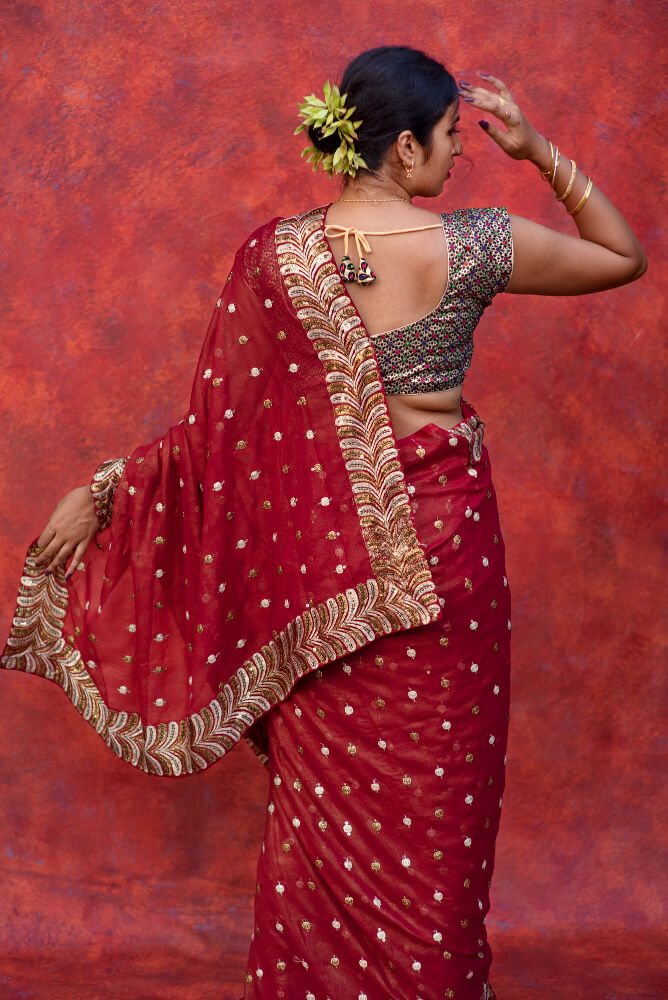
2. Patola Saree (Gujarat)
- Made using the double ikat technique, where both warp and weft threads are dyed before weaving.
- Highly detailed and symmetrical geometric designs are a hallmark of Patola sarees.
3. Kanjeevaram Saree (Tamil Nadu)
- Made from fine mulberry silk, known for its rich texture and bright colors.
- These sarees feature temple borders and elaborate zari work, often with traditional South Indian motifs.
4. Chanderi Saree (Madhya Pradesh)
- Known for its lightweight silk and cotton fabric with intricate handwoven zari motifs.
- Famous for its translucency and glossy texture, with floral and geometric designs.
5. Tant Saree (West Bengal)
- Woven with cotton and known for its lightness and breathability.
- Designs typically feature bold borders and floral or paisley patterns.

6. Phulkari Saree (Punjab)
- Characterized by intricate embroidery, often with floral motifs made using vibrant silk threads.
- Phulkari is traditionally done on cotton or khadi fabric.
7. Bandhani Saree (Gujarat/Rajasthan)
- Made using a tie-dye technique where fabric is tied into small knots before dyeing.
- Famous for its vibrant colors and dotted patterns, which form intricate designs.
8. Pochampally Saree (Telangana)
- Woven with the ikat technique, known for its geometric patterns.
- The sarees are crafted using silk or cotton, with striking designs and vibrant colors.
9. Dhakai Jamdani Saree (Bangladesh/West Bengal)
- Known for its delicate and intricate weaving, often involving floral and paisley patterns.
- These sarees are made using fine cotton muslin and sometimes silk.
10. Kalamkari Saree (Andhra Pradesh)
- Hand-painted or block-printed sarees with mythological and nature-inspired motifs.
- Natural dyes are used for coloring, and the process is entirely manual.
11. Hand Block Printed Saree (Various States)
- Produced using wooden blocks dipped in dye to create intricate patterns on fabrics like cotton, silk, and linen.
- Rajasthan is particularly known for block-printed sarees like Bagru and Sanganeri prints.
12. Paithani Saree (Maharashtra)
- Made from fine silk and known for its peacock and floral motifs in gold or silver threads.
- The weave is very intricate, often featuring oblique designs.
13. Baluchari Saree (West Bengal)
- Known for its narrative designs, often depicting mythological stories on the pallu (the end of the saree).
- The saree is woven with silk threads and features intricate brocade work.

14. Ajrakh Saree (Gujarat)
- Crafted using a resist-dyeing technique that involves natural dyes and detailed geometric patterns.
- Primarily made in Kutch, Gujarat, these sarees are known for their deep blue and red tones.
15. Kasavu Saree (Kerala)
- Traditionally a white or cream saree with a golden border, worn during festivals and ceremonies.
- It is made using cotton or silk with minimal embellishments, highlighting the simplicity of Kerala’s traditions.
16. Maheshwari Saree (Madhya Pradesh)
- A mix of silk and cotton, these sarees are light and have distinctive stripes, checks, and floral designs.
- Often worn for formal occasions due to their refined look.
17. Bhagalpuri Silk Saree (Bihar)
- Known for its unique tussar silk fabric, which has a coarse texture and natural sheen.
- The designs are minimal but elegant, focusing on the natural beauty of tussar silk.
Each of these sarees represents not just a product, but a tradition of craftsmanship that has evolved over generations. They are important parts of India’s cultural and artisanal heritage.